
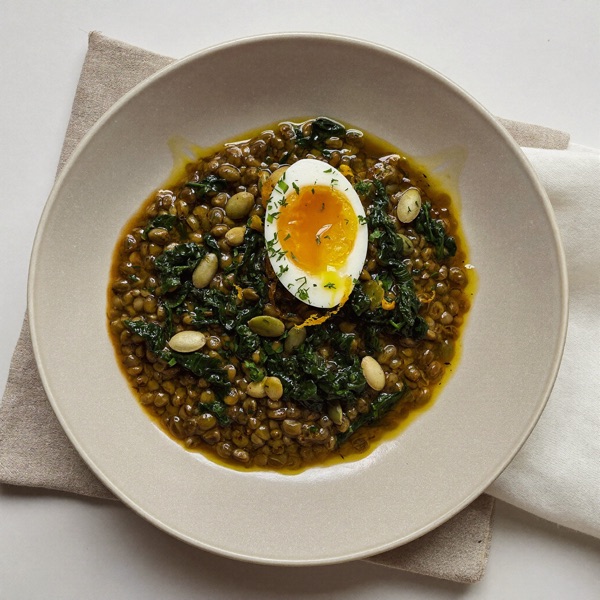
Warm Lentil Breakfast Bowl with Soft Egg and Lemon
A cozy bowl of lemony warm lentils crowned with a soft, jammy egg and toasted pumpkin seeds. The lentils and pepitas team up to deliver about 4.9 mg of zinc, a mineral that plays a supportive role in everyday thyroid nutrition.
- Prep
- 5 min
- Cook
- 15 min
- Total
- 20 min
- Servings
- 1
Ingredients
- 180gcooked brown or green lentils (about 1 cup, canned and rinsed or batch-cooked)
- 1largeegg
- 1.5tbspextra-virgin olive oil (about 20 g)
- 0.5lemon, juiced (about 1 tbsp) plus a little zest
- 28gpumpkin seeds (pepitas), raw or unsalted
- 1clovegarlic, thinly sliced
- 1handfulbaby spinach (about 20 g)
- 2tbspfresh parsley, chopped
- 1pinchsalt
- 1pinchblack pepper
- 1pinchground cumin (optional)
Instructions
- 01
Bring a small pot of water to a gentle boil. Lower in the egg and cook for 6 to 7 minutes for a soft, jammy yolk. Transfer to a bowl of cold water, then peel and halve.
- 02
While the egg cooks, toast the pumpkin seeds in a dry skillet over medium heat for 2 to 3 minutes, shaking often, until they puff and smell nutty. Tip onto a plate and set aside.
- 03
Return the skillet to medium heat and add 1 tablespoon of the olive oil. Add the sliced garlic and cumin (if using) and cook for about 30 seconds until fragrant.
- 04
Add the cooked lentils and a splash of water. Warm through for 3 to 4 minutes, stirring, then fold in the spinach and let it wilt. Season with salt and pepper.
- 05
Off the heat, stir in the lemon juice and most of the parsley. Taste and adjust seasoning.
- 06
Spoon the warm lentils into a bowl. Top with the halved soft egg, scatter over the toasted pumpkin seeds, and finish with the remaining parsley, a little lemon zest, and the last 1/2 tablespoon of olive oil.
Nutrition (per serving)
- Calories
- 630kcal
- Protein
- 27g
- Carbs
- 40g
- Fat
- 31g
- Fiber
- 15g
- Selenium
- 20mcg
- Zinc
- 5mg
- Iron
- 9.5mg
- B12
- 0.6mcg
- Iodine
- 24mcg
- Sodium
- 360mg
More recipe collections
Plan similar thyroid-friendly meals
These links are generated from this recipe’s meal type, dietary filters, and nutrient emphasis. They are educational meal-planning paths, not medical treatment recommendations.